
Not the Most Efficient Way
friction is not the enemy

When people talk about how to improve as a runner, they usually focus on one of three areas: running efficiency (or, more popularly, running economy, but who wants to talk about the economy these days?), VO2max, and lactate threshold. I’ve provided links to the latter two, in case you want to know more, as I’m going to talk a bit about the first instead.
As for running efficiency/economy, it’s exactly what it sounds like. The goal is to run as efficiently as possible, much of which comes through our form. Given that I’ve been focusing on my form to avoid injuries, I’ve also been thinking about how my running form does and doesn’t help me run efficiently. If you want another way of thinking about it, let’s use the analogy of a bicycle. If your goal is to pedal the bicycle at 10 miles per hour, that’s easier to do if you don’t have the brakes pressing against the tires. If you tried to pedal at that rate, while also clinching the rear brake, you would have to work much harder to get to that pace, even if you were able to do so.
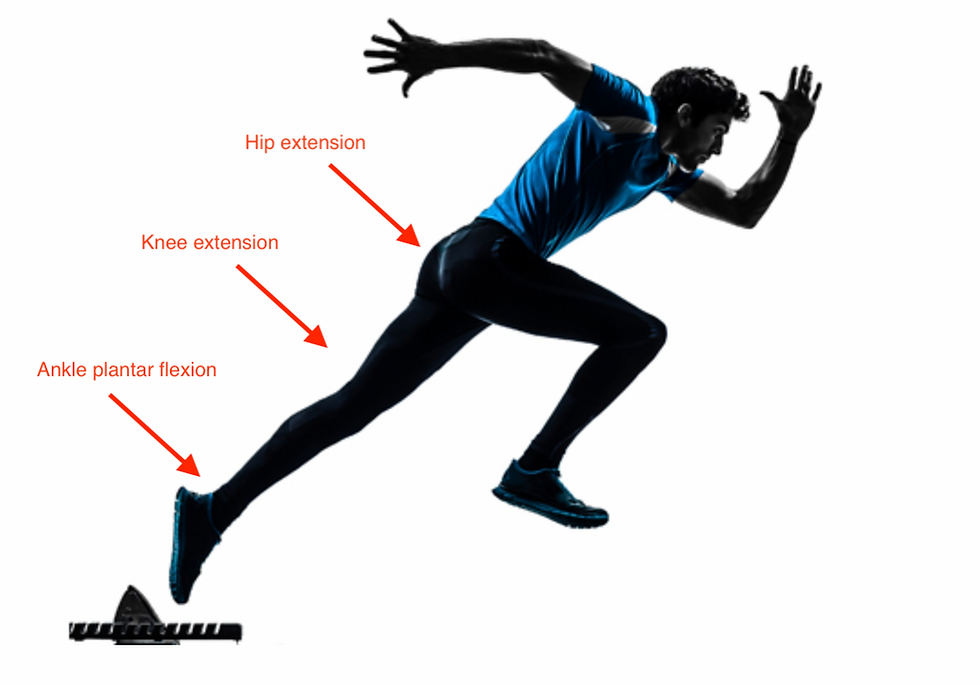
My problem has been that I’ve been overstriding, which is the equivalent of having the brakes slightly depressed, given that the angle of my foot when it hits the ground is slowing me down, as opposed to pushing me forward. Over the past few weeks, I’ve been able to run the same paces as I was before, especially with my easy runs, but those paces feel easier now (save for when the heat and humidity creates other types of friction to slow me down).
But I’ve also been thinking about efficiency in broader terms based on a few items I’ve read recently. First, here’s a piece by Ezra Klein, opinion columnist for The New York Times, titled “What the Cult of Efficiency Costs Us.” With that title, he could be writing about many aspects of our current society; however, his focus is on factory farming, especially with pigs, animals that are quite smart, but that we treat abysmally, all in the name of efficiency. I don’t talk much on here about being a vegetarian, but he’s hitting on some of the reasons why I take that approach to my diet. Factory farming is one of the largest contributors to the climate crisis, and I just can’t support it in good conscience. Klein makes a strong argument for why we should at least treat animals raised for food better, arguing that efficiency for some people/creatures almost always results in poor products/results for other people/creatures.
We could apply this idea to a wide variety of issues today, but the first one I thought of was AI (followed quite closely by corporate culture, especially for warehouse organizations like Amazon). Those of us on this end of the product want the system to work efficiently. When we type in a query or prompt to a chatbot or click Buy on a website, we don’t want to think about what has to happen on the other side of that system. We simply want to believe that it’s working efficiently for us, even if it’s destroying the environment or making somebody else’s life far from enjoyable, not to mention, inefficient.
Similarly, I recently read C. Thi Nguyen’s The Score: How to Stop Playing Someone Else’s Game. He contrasts metrics, which seem to dominate our contemporary systems (as we want them to be more efficient), and games. One of the ways he talks about games is a system where we set up obstacles that we need to overcome to reach our goal. We could also call those obstacles friction, of course. That’s largely what running is. If I mentioned to somebody that I’m doing a long run of 14 miles, they might joke, Why don’t you just drive? They’re right, of course, as that would reduce a great deal of friction. People also make the comment, I only run when something’s chasing me, as they are unknowingly saying that they need an obstacle.
We set up obstacles in running all the time, wanting to create friction. I could go out and run a marathon right now, but I couldn’t run it at the time I want. We run arbitrary distances, which is why people ask me how long a 10K is any time I mention it to a nonrunner. We might as well run 4.9847 miles as 6.2. What we’re doing, though, is creating consistent measurements of friction, as that’s how we can push ourselves. Friction is what leads to progress. I keep adding different layers of friction, from pace to distance to terrain to weather, all so I can continue to improve at the very basic action of running.
Klein is right when he argues that we’ve set up efficiency as our cult, and we worship it to our detriment. If we want to improve as individuals and as a society, we have to topple that false god and find meaning in friction again. It’ll make us better people, as well as better runners.