
Running on the Road
two states, two countries, and the high seas

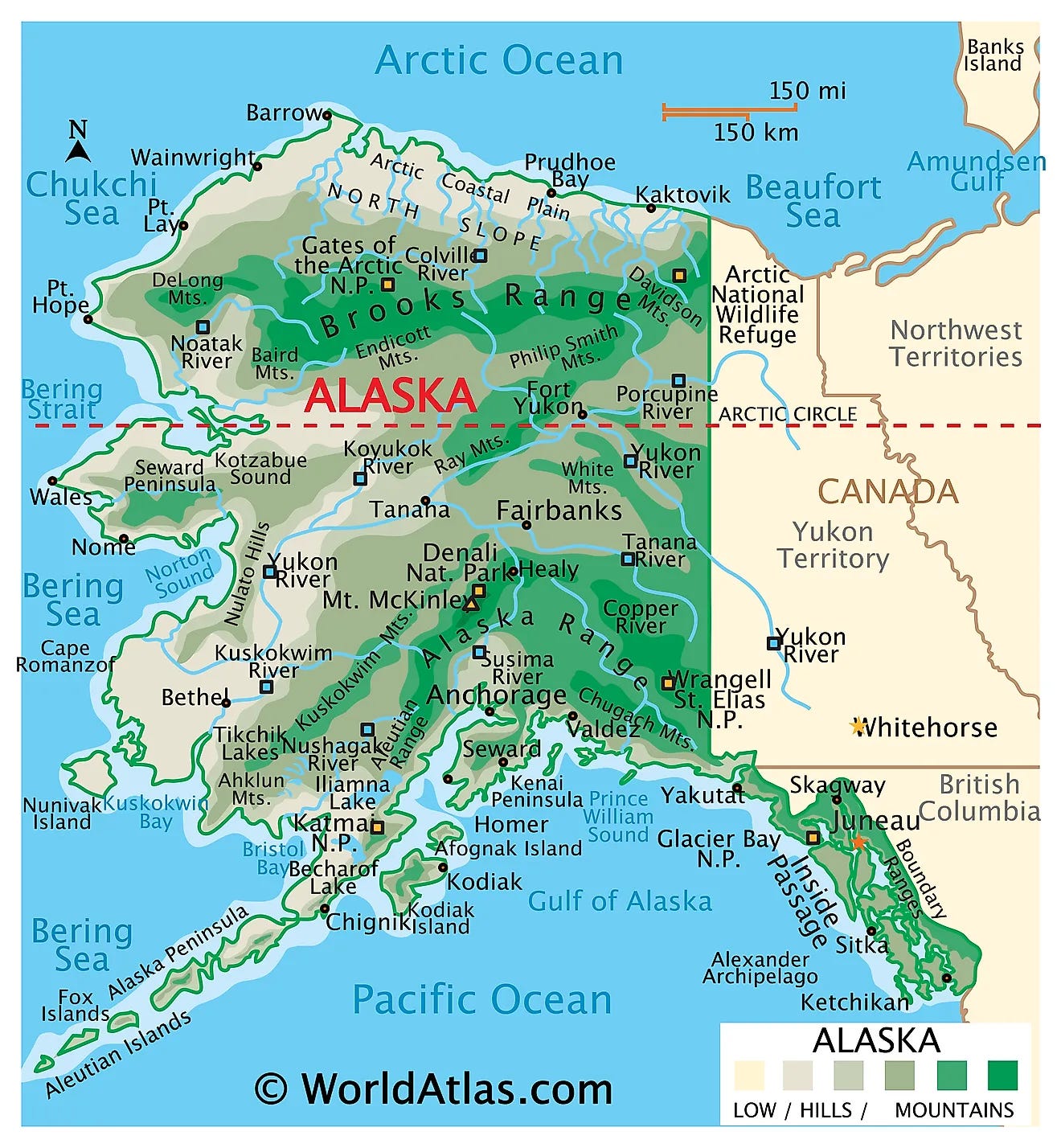
Courtney and I just came back from a two-week vacation to Alaska, part of which involved a cruise, and I tried to run throughout the vacation. Part of that is just because I love running, of course, but I’m also planning to run another 5K in two weeks, so I was trying to prepare for that, as well. I had seven runs while we were gone: one in Vancouver before boarding the ship; two while on the ship; one in Seward; two in Fairbanks; and one in Seattle before catching a flight to come home. They all presented their own challenges, so I’ll divide them by those challenges.
Running on a Ship:
I’ve only been on two cruises in my life, and I can’t say I’m fond of them. At all. However, it seemed the best way to see parts of Alaska, so we went that route. I hadn’t thought too much about running when we were planning the trip, but I thought about it a good deal before we left. In looking at a map of the ship, though, I saw that there was a walking/running track on the top deck, so I wasn’t worried. However, given the size of the ship, it took 9 1/2 laps of that track to make a mile, which isn’t very enjoyable running. I believed, though, that I could use my GPS to track my distance and not have to worry about counting laps. I was wrong.
I was doing a series of 400/800 repeats that day, but I hadn’t thought about the problem that the movement of the ship would cause. Since GPS was tracking me, it thought I was moving much faster than I was (I don’t believe I’ve ever run a six-minute mile, but my watch believed that I did, and it was during an easy part of the run). Thus, I did have to count laps. Also, given the shortness of the track, the turns were quite sharp, and the surface was wet, so I had to try to widen out my turns to keep from slipping. Needless to say, that made running a 400 at a quick pace even more difficult.
The second run on the ship presented a different problem. When I was talking to my coach, she told me that I might have to fall back to the treadmill, given that there are often obstacles on the track on a cruise ship (she has also taken an Alaskan cruise). I didn’t realize the main obstacle would be people. When we were approaching the Hubbard Glacier, (see stock photo below) people began gathering on the top deck before six in the morning, even though we wouldn’t get close to the glacier for another couple of hours. Thus, I couldn’t run outside and had to switch to the treadmill.

I’m not great at running on the treadmill to begin with, but doing so on a moving ship becomes even more of a challenge. The side-to-side motion makes running quickly on a treadmill even more difficult. I was still able to do a run that involved three miles at 5K pace, with a warm up and cool down. And my view out the window of the mountains on the coast of Alaska was at least much better than what I normally see when I have to run on a treadmill.
In Alaska:
Running in Alaska was the easiest part of the trip, save for one concern, which came up in Seward. Given how small Seward is (just under 3000 people), we stayed at a hotel located on a small road in a wooded area, and there was no fitness center (and, thus, no treadmill). To run, I would have to start out on that smaller area for about half a mile before getting to the main road where there was a running/biking path that ran alongside the road (kudos to Alaska for having those paths throughout, by the way—I hope other places take note).
I wasn’t worried about the small road, given how early I run, but Courtney was worried about wildlife. It’s true that there are bear and moose sightings on a regular basis in such locations, but I tend not to worry about such things, especially when I’m running on or near a road. If I would have been out on the trails, then I would have been more concerned. I did, however, watch the woods a bit more diligently than I would otherwise.
Given that I just had a seven-mile easy run, the path made everything easy. I ran down to the waterfront, then back to the hotel. Another kudos for having a public bathroom at the waterfront, which made my run more enjoyable.
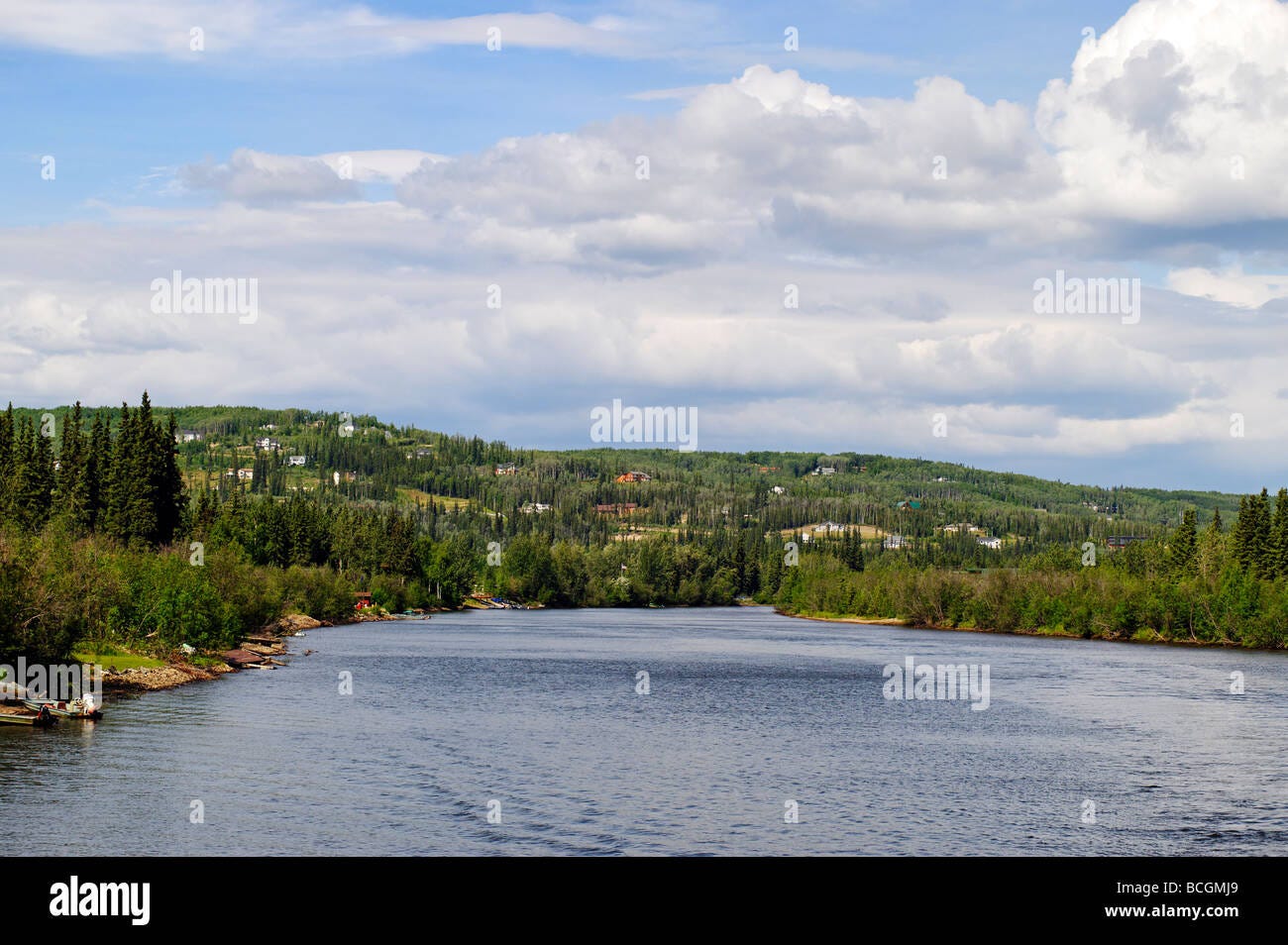
Running in Fairbanks was easier, as we stayed at a hotel near the airport, so we were on a main road. They had a frontage road that connected to a bike/running path beside the main road, which made running easy, yet again. I also found a more developed greenway a couple of miles from the hotel, which made the 400/800 repeats easier. However, that greenway was rather difficult to find, as the entrance was in a driveway to a kayaking company, and it wasn’t marked. Running by the Chena River (stock photo below), though, was more enjoyable than running beside traffic.
The next run was an easy three miles, so I didn’t even make it to the greenway that morning. Still, having the running area blocked off from traffic made it more enjoyable than it would have been otherwise.
Vancouver and Seattle:
The run in Vancouver was great, as we were staying near the airport in Richmond, and there was a park nearby (Minoru Park, if you’re curious). It had about a mile loop that I could run with the other challenges being avoiding the geese and crows/ravens (I can’t ever tell the difference) that were quite willing to get in my way. It’s always nice when cities have such green spaces set aside, and this one even had a track in it, should I have needed it. Again, other cities, especially in the South, please take note. I only had a six-mile easy run, so it was an enjoyable morning before we boarded the ship around noon.
In Seattle, we had to catch our flight home, so we were staying in a hotel right beside the airport (and I do mean right beside, as people were walking to the airport from our hotel). I ran a loop from the hotel away from the airport into more residential areas, so I avoided a good deal of the traffic. However, I didn’t avoid the hills, of which there was many on that roughly two-and-a-half mile loop. I ran just under eight miles with an elevation gain of somewhere around 700 feet.
Given that I was running three of those miles at half-marathon pace, the run was a real push, as the hills were steep, both climbing and descending. I ended up running a solid pace, but it was more than I expected. Of course, the difference in weather helped, as most mornings, no matter where I was, where in the fifties, as opposed to the seventies I left behind in Tennessee.
Back Home:
Speaking of those temperatures, this morning I ran a seven-mile easy run, and I certainly felt the heat and humidity, though not as much as I expected. They weren’t bad enough to make the run challenging, but I was soaked when I finished. The weather prediction for this morning was 72 degrees with 100% humidity, and it definitely felt like it. I took in some electrolyte drink while I was running to try to keep hydrated, but I still sweated it all out, then some. Still, it was an easy morning, and it felt good to run a familiar path.
What About the Diabetes?
Running on the road with diabetes presents other struggles, especially because I don’t eat before I run when I’m on vacation, as Courtney and I eat breakfast together. There were a couple of days when I had a banana before my run, or, on other days, I would eat a Honey Stinger waffle to at least give me some carbohydrates and sugar. That approach helped to keep me from crashing when I was running. Of course, I also put my Omnipod on activity mode, as I always do, and I carried a gel just in case my numbers plummeted, which, thankfully, never happened.
Overall, it was successful vacation in terms of running and diabetes, despite the various challenges along the way. I’m looking forward to a couple of weeks of more predictable running, despite the weather that will continue for weeks and weeks.